
Why Is Buying A Foam Hot Tub Cover So Painful? Here’s What’s Really Going On.
- THRML TECH

- Mar 23
- 8 min read
Why Is Buying A Foam Hot Tub Cover So Painful? If you’ve ever tried to replace a waterlogged, heavy spa cover, you already know the frustration: confusing measurements, surprise shipping costs, long lead times, and a product that often starts failing sooner than it should. For something that looks simple, a traditional foam cover can be one of the most annoying parts of hot tub ownership.
The good news is that the pain points are predictable. Once you understand why foam covers fail, what makes ordering complicated, and what alternatives exist, you can make a choice that keeps your spa warmer, cleaner, and cheaper to run.
Understanding the Basics
A foam hot tub cover is typically a vinyl wrapped shell with rigid foam panels inside. Its job is to slow heat loss, reduce evaporation, and keep debris out. In real-world use, covers also face constant UV exposure, chemical vapor, heavy rain and snow loads, and repeated handling, which is why so many owners end up replacing them more often than they expected.
Where the frustration starts: covers look standard, but they rarely are
One reason buying a replacement foam cover feels painful is that hot tubs aren’t as interchangeable as they appear. A “7x7” spa might not be exactly 84 inches by 84 inches. Corners might be clipped differently. The radius could vary. The hinge could be centered or offset. Even a half-inch mismatch can create gaps, and gaps mean heat loss and faster evaporation.
On top of that, many owners are replacing a cover that has deformed over time. A sagging, swollen cover can throw off your measurements and make it hard to order the correct replacement.
Why foam hot tub covers get so heavy
If your old cover feels like it gained 50 pounds, it probably did. Most “heavy cover” problems come from moisture intrusion. Once water vapor makes its way into the cover and reaches the foam core, weight climbs fast and handling becomes a chore.
Vapor and humidity: Hot tubs constantly produce warm, moist air. When the cover cools at night, that moisture condenses.
Seams and stitching: Over time, small openings can let water in, especially around the hinge and along stressed seams.
Damaged or degraded vinyl: UV and weather break down the outer skin, making tiny cracks more likely.
Beyond convenience, weight matters because heavy covers are harder to seal properly. When people struggle to close the tub after each use, they sometimes leave it slightly open, which drives up heat loss and operating cost.
The hidden costs: shipping, disposal, and “while you’re at it” repairs
Traditional foam covers are bulky, which can make shipping surprisingly expensive. It’s also common for owners to discover extra costs along the way:
Freight delivery fees or limited delivery windows
Disposal fees for the old cover (some areas treat them as bulky waste)
New cover lifter hardware if the old lifter is bent or no longer fits
Strap replacements, broken buckles, or cracked mounting points
It’s also worth noting that a poorly fitting cover can quietly increase your energy bill month after month. The U.S. Department of Energy highlights how insulation and heat retention reduce heating demand, which applies directly to hot tubs that must constantly replace lost heat: energy efficiency advice.
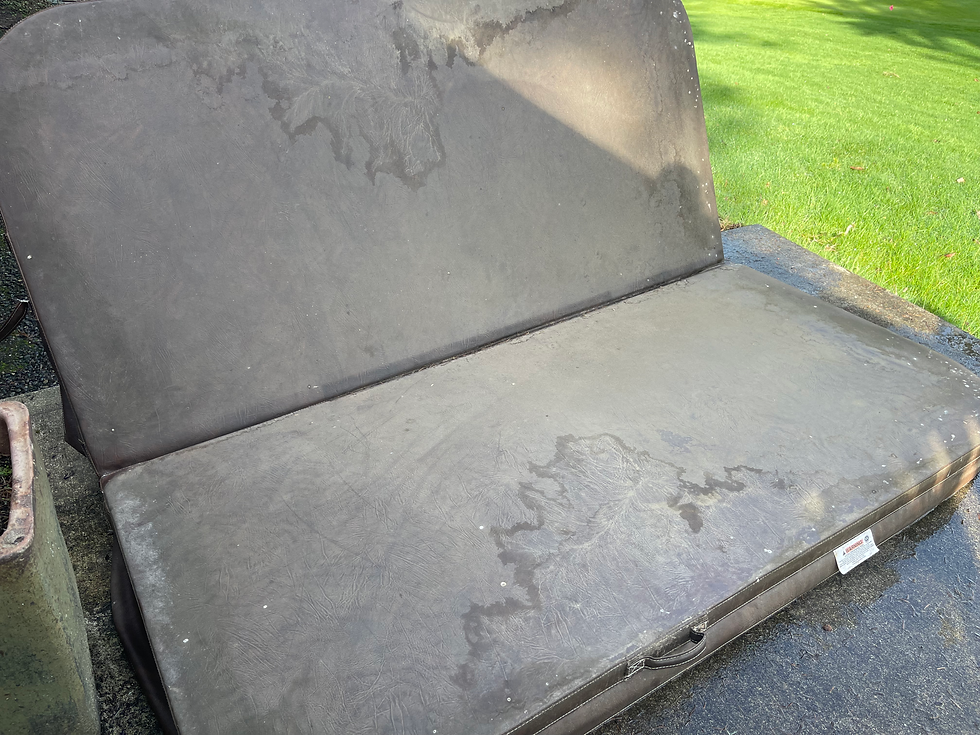
Foam cover failure points most owners don’t see until it’s too late
From a technician’s perspective, foam covers usually don’t “suddenly” fail. They slowly lose performance, then the symptoms become obvious.
Hinge breakdown: The hinge is a high-stress zone. Once it sags, water can pool and speed up wear.
Taper collapse: Some covers lose their slope, which encourages standing water and adds load.
Seal and skirt wear: If the skirt is torn or stiff, air leaks increase heat loss and let debris in.
Chemical damage: Off-gassing from sanitizer and fluctuating pH can shorten the life of materials around the underside.
If you want a deeper rundown of what typically goes wrong, thrml covers common failure patterns and solutions in this post about why hot tub covers fail.
Evaporation is the real energy thief
Many spa owners focus on “insulation” as if heat only escapes through conduction. In practice, evaporation is often the biggest driver of heat loss in an uncovered or poorly covered spa. When water evaporates, it carries a large amount of heat away from the tub, forcing your heater to replace that energy.
This is why a good-fitting, well-sealing cover matters so much. It reduces evaporation, which helps:
Maintain water temperature more consistently
Reduce heater run time and electricity usage
Lower humidity and moisture around the spa cabinet area
Stabilize water chemistry and reduce chemical demand
If you’d like a science-based explanation of how evaporation works and why it increases with airflow and temperature, the engineering overview from NOAA is a helpful primer: NOAA evaporation overview.
How to reduce heat loss from your hot tub without fighting your cover
If the current cover is so heavy or awkward that it discourages regular use, it’s not just annoying. It’s costing you money. Here’s a practical, step-by-step way to improve heat retention and reduce the day-to-day hassle.
Step 1: Check for gaps, sagging, and poor skirt contact
Close the cover and walk around the spa. Look for visible gaps along the shell, corners that don’t sit flat, or a skirt that no longer hangs evenly. Even small openings let warm, humid air escape, increasing evaporation and heat loss. If you can feel warm air leaking out on a cold day, that’s lost energy.
Step 2: Confirm water chemistry and ventilation habits
Chemical imbalance can accelerate material wear, especially on the underside of the cover. Keep sanitizer and pH within your spa manufacturer’s recommended range, and give the tub a few minutes to off-gas after heavy shocking when appropriate for your routine. For solid water care fundamentals, the CDC’s pool and hot tub guidance is a good reference point: CDC healthy swimming resources.
Step 3: Upgrade to a modern thermal cover designed to stay easy
If your goal is fewer headaches and lower operating cost, consider moving away from the traditional foam-core approach. Thrml designs purpose-built efficient covers that focus on reducing evaporation and heat loss while staying lightweight and durable. The AIRCAP™ 1 hot tub cover is built to replace traditional spa covers, sealing and insulating effectively without the same day-to-day struggle of handling a heavy, waterlogged foam lid.
For owners comparing options, thrml also breaks down the benefits of energy efficient spa covers in practical terms.
What to look for when choosing a replacement cover
Whether you stick with foam or choose a different style of thermal cover, the selection checklist is similar. You’re trying to minimize heat loss, minimize evaporation, and maximize ease of use so the tub stays covered when it should.
Fit accuracy: The cover should match shell dimensions, corner radius, and skirt depth to seal properly.
Ease of handling: If it’s too heavy, it won’t get used consistently, and performance drops fast.
Weather resistance: Sun, rain, snow load, and wind exposure should match your climate reality.
Durability over time: Look for a design that maintains shape and seal, season after season.
Energy impact: A better seal and reduced evaporation typically translate to lower heating cost.
Thrml publishes additional buying guidance for owners who shop online in this durable hot tub cover guide.
Making sure you order the right fit the first time
Another reason buying a foam hot tub cover feels painful is the fear of ordering the wrong size. Getting the fit right matters for both performance and peace of mind.
If you’re upgrading to an AIRCAP™, two tools make the process much easier:
The SureFit measuring guide helps you measure your spa correctly before ordering, so you don’t rely on old paperwork or a stretched, sagging cover.
The SpaFitter compatibility tool helps match AIRCAP™ covers to your spa model, taking the guesswork out of fit and shape.
If you prefer buying through a local supplier, you can also use the Thrml retailer locator to find authorized retailers.

Why AIRCAP™ covers are changing the ownership experience
Many owners accept cover problems as normal: heavy lifting, cracked vinyl, waterlogging, and constant replacement cycles. But the cover is one of the most important “energy parts” of your spa. When it works well, it helps keep heat in and evaporation down, which supports stable water chemistry and cleaner water.
Thrml's approach is centered on thermal efficiency: reduce heat loss, reduce evaporation, and make the cover easier to live with so it gets used consistently. If you want to explore how this design philosophy holds up in real-life handling and durability, see the strength of AIRCAP™ 1 covers and how owners use them for ongoing protection.
In cold climates, cover performance matters even more. If winter is when your cover struggles most, this overview of cold-climate hot tub cover upgrades is a useful read.
FAQ: Why Is Buying A Foam Hot Tub Cover So Painful
Why does my foam hot tub cover become waterlogged?
Over time, moisture can get past seams, stitching, or a degrading outer layer. Warm humid air from the spa condenses as temperatures change, and once that moisture reaches the foam core, the cover gains weight and becomes harder to lift and harder to seal properly.
How do I know if my cover is costing me money?
Common signs include the heater running more often than it used to, faster temperature drop overnight, visible steam escaping around the edges, and increased chemical demand. Gaps and poor sealing increase evaporation, which forces the heater to replace lost heat.
Is a heavier foam cover always better insulated?
No. Weight often indicates absorbed water, not better insulation. A good cover should seal well and resist performance loss over time. If a cover is heavy because it’s waterlogged, it can actually become less convenient to use, leading to more heat loss if it isn’t closed consistently.
Why is it so hard to order the correct size replacement?
Hot tub shells vary by a lot of small details: exact length and width, corner radius, hinge position, and skirt depth. Measuring an old, sagging cover can also produce inaccurate numbers. Using a structured measuring process helps prevent costly mistakes.
Can a better cover help reduce chemical usage?
Yes. Reducing evaporation helps stabilize water balance because you’re losing less water to the air and introducing less debris. A well-sealing cover also helps keep contaminants out, which can reduce the amount of sanitizer and balancing chemicals you need over time.
What’s an easier alternative to a traditional foam core cover?
Many owners move to modern thermal covers designed to reduce heat loss and evaporation without the same handling issues as waterlogged foam. Thrml’s AIRCAP™ 1 is designed to replace traditional hot tub covers, focusing on effective sealing and insulation while staying lightweight and durable.
How do I make sure an AIRCAP™ cover will fit my spa?
Use the SpaFitter compatibility tool to match your spa model, and confirm measurements using the SureFit measuring guide. Fit is crucial for performance because the seal is what reduces evaporation and heat loss.
Conclusion: make the cover the easiest part of spa ownership
If you’ve been asking, “Why Is Buying A Foam Hot Tub Cover So Painful,” it usually comes down to a predictable mix of waterlogging, fit confusion, shipping hassles, and a design that becomes harder to use over time. Since your cover is your primary barrier against heat loss and evaporation, upgrading it is one of the most practical ways to improve comfort and reduce running costs.
Thrml specializes in thermal efficiency solutions for hot tubs, with advanced covers designed to retain heat, reduce evaporation, help maintain cleaner water, and lower chemical usage. If you’re ready for an easier, more energy-conscious approach, the AIRCAP™ 1 hot tub cover is a purpose-built replacement for traditional spa covers, and Thrml’s tools like SpaFitter and SureFit can help you get the right fit the first time


Comments