
AIRCAP 1™
Our Pledge to Make a Difference
Longer-lasting covers mean far less landfill waste.
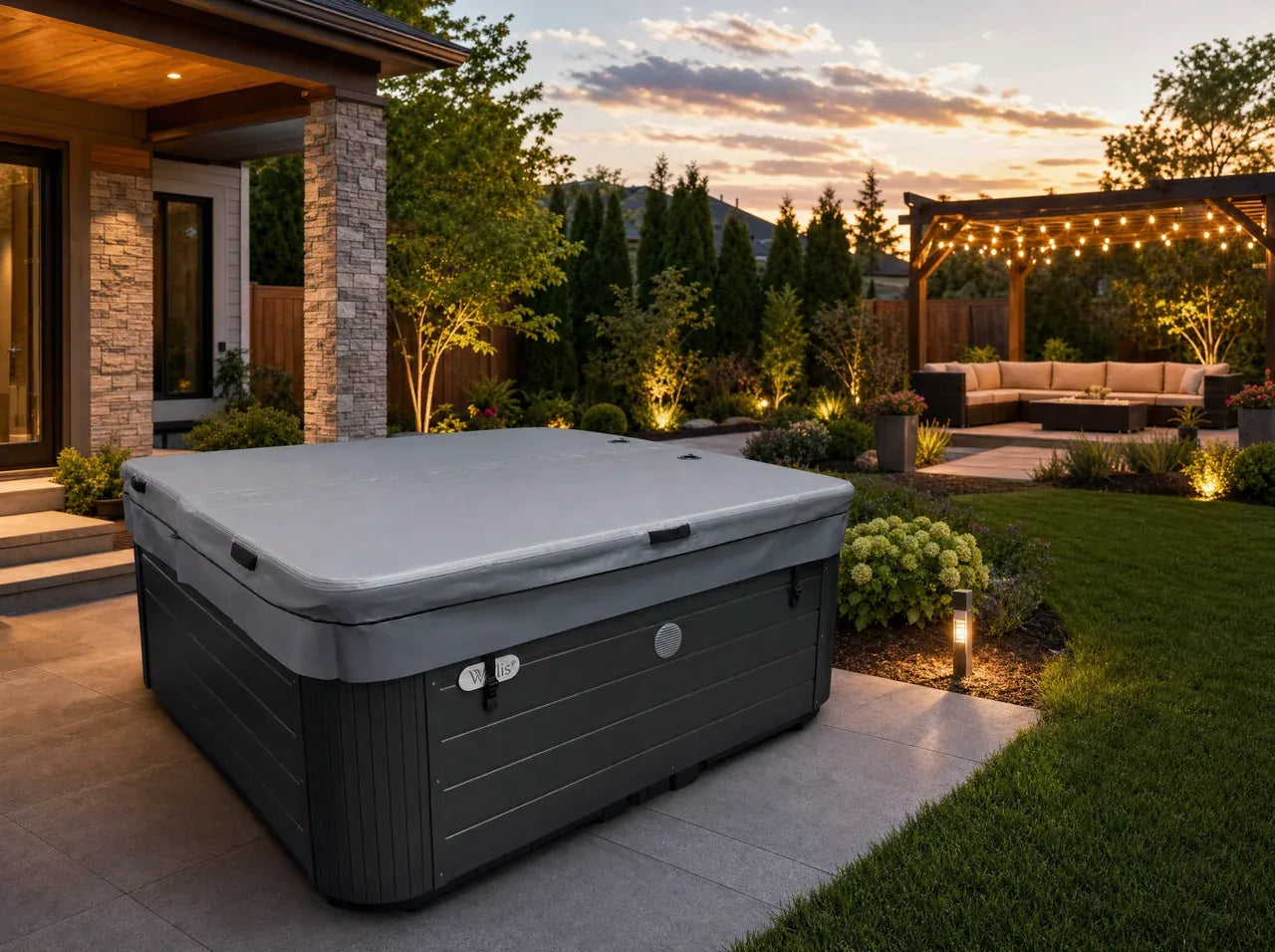
With approximately 28 million hot tubs in operation worldwide, the frequent replacement of traditional foam covers contributes significantly to environmental waste. These covers, typically made from expanded polystyrene (EPS) foam encased in vinyl, have a lifespan of 3 to 5 years and are often non-recyclable, leading to substantial landfill accumulation. Stuck with a dead one now? Here is how to dispose of a hot tub cover responsibly. At thrml.™ we understand the waste volume from these products — one of the many reasons we created the innovative AIRCAP 1™: to address these issues by offering a longer-lasting, more durable, environmentally friendly option.
- 700M lbFoam covers landfilled every year (est.)
- 165,000Covers discarded monthly in North America
- 0%Water absorbed by the cover — so it never insulates worse than the day you bought it
- 6–7×Times PVC can be recycled
Global hot tub ownership and cover usage
Hot tubs are a popular relaxation and therapeutic feature in homes and commercial settings globally. Estimates suggest there are around 26 to 28 million hot tubs in use worldwide, with the U.S. alone accounting for about 7.3 million.
Traditional hot tub covers are essential for insulation, energy efficiency, and product protection, but the dominant design uses foam cores that degrade over time due to moisture absorption, UV exposure, and chemical breakdown from spa water. These covers must be replaced every 3 to 5 years on average, with outdoor exposure accelerating wear to as little as 2 to 4 years in harsh climates.
Environmental impact of foam hot tub covers
Foam hot tub covers pose a significant environmental challenge because they are not recyclable. The EPS foam core often absorbs water and hazardous chemicals, becoming saturated and ineffective, while the vinyl exterior tears or fades. Many waste facilities refuse them due to the composite materials and hazardous chemicals in the foam. As a result, most end up in landfills, where they contribute to non-biodegradable waste. In North America alone, an estimated 165,000 covers are discarded monthly, exacerbating landfill overcrowding and releasing microplastics over time. Broader concerns include the energy-intensive production of new covers and the overall carbon footprint of hot tubs, which can be mitigated by better insulation but worsened by frequent replacements.
Calculation of annual landfill waste
To quantify the waste, we use the following assumptions based on industry data:
- Global hot tubs: 28 million (aligned with estimates of 26–28 million).
- Average cover lifespan: 4 years (midpoint of 3–5 years).
- Annual replacements: 28,000,000 ÷ 4 = 7,000,000 covers per year.
- Average weight per cover: 100 pounds (typical range of 75–125 lbs for a standard 7-foot square cover).
Total annual waste weight: 7,000,000 covers × 100 pounds = 700,000,000 pounds (or 350,000 tons, at 2,000 pounds per ton).
This assumes steady-state replacement and does not account for market growth or variations in cover sizes and weights. In reality, waste could be higher in regions with harsher weather, where lifespans shorten to 3 years — potentially increasing annual waste to over 920 million pounds (460,000 tons).
The sustainable alternative
The AIRCAP 1™ hot tub cover from thrml.™ addresses many of these waste issues through innovative design. Made from rigid welded drop-stitch PVC — similar to that used in durable inflatable paddleboards — it easily inflates for use. Our patent-pending AirLoc™ heat-welded construction makes it significantly stronger and more durable than foam covers, extending lifespan beyond the typical 3–5 years by resisting moisture, UV damage, and physical wear. Additionally, drop-stitch PVC is recyclable; PVC can be mechanically recycled up to 6–7 times without significant loss of properties, reducing landfill contributions compared to foam. Features like our patent-pending Ziptech™ zip-on replacement skirts and the ability to pressure wash further enhance longevity and ease of maintenance, significantly cutting replacement frequency and waste.
The thrml.™ commitment
At thrml.™ we are committed to designing products that prioritize planetary health, aligning with growing consumer demand for sustainable wellness solutions in the hot tub market.
By focusing on energy efficiency, material innovation, longevity, and zero-plastic recyclable packaging, thrml.™ minimizes environmental impact across the product lifecycle — from production to end-of-life. Our flagship AIRCAP 1™ and future products are engineered to significantly reduce the ecological footprint of hot tub ownership. Key design principles include:
Superior thermal insulation and energy efficiency
The core of the AIRCAP 1™ incorporates our advanced AirLoc™ technology to trap heat effectively. A well-insulated cover like the AIRCAP 1™ reduces heat loss compared with a foam cover that has begun to absorb water, meaning the heater runs less frequently. This directly lowers energy consumption — hot tubs are among the more energy-intensive home appliances — and cuts greenhouse gas emissions from electricity generation. For homeowners, that means lower utility bills and a smaller carbon footprint.
Durable, long-lasting materials
- A recyclable, low-impact outer material that is lighter, more UV-resistant, and recyclable — a solution to dyed polyester, traditional vinyl, and EPS foam.
- High-performance welded drop-stitch needing significantly less frequent replacement.
- Avoidance of polluting elements like heavy Styrofoam.
Longer-lasting covers mean fewer resources used in manufacturing and less landfill waste over time.
Water conservation and reduced chemical use
By minimizing evaporation (a major issue with poorly insulated tubs), the AIRCAP 1™ helps maintain water levels and chemistry. This reduces the need for frequent refills and chemical treatments, conserving water and limiting the release of sanitizers into wastewater systems.
Overall lifecycle impact
The AIRCAP™ is designed for reparability and recyclability at end-of-life, encouraging circular-economy practices. Features like modular components and easy-to-replace parts extend usability, while energy savings compound environmental benefits throughout the product's life (typically 5–10+ years with proper care).
Zero-plastic, fully recyclable packaging
All thrml.™ packaging is designed to be 100% reusable and fully recyclable (or curbside-compatible in most U.S. locations), eliminating single-use plastics entirely:
Materials used: corrugated cardboard boxes (high post-consumer recycled content, often FSC-certified for responsible sourcing), paper-based protective wraps, kraft paper tape (water-activated or reinforced for strength without plastic), and recyclable paperboard inserts or honeycomb structures for cushioning.
Benefits: this avoids plastic pollution, reduces fossil-fuel dependency in packaging production, and supports easy recycling — cardboard and paper can often be recycled multiple times. It aligns with our zero-waste goals at thrml.™
Implementation: packaging is minimalist yet protective (e.g., custom-fit boxes to minimize material use and void fill), with clear recycling instructions printed on the boxes to encourage proper disposal.
By combining these elements, we not only deliver high-performance hot tub covers that save energy and money, but also contribute to our broader planetary goals: lower emissions, reduced resource extraction, less waste, and the promotion of sustainable outdoor living.
Find your AIRCAP 1™
Get the cover that fits your spa in seconds.
Shop the AIRCAP 1™
Six sizes for 77″–94″ square spas — about the AIRCAP · safety & ASTM F1346-23